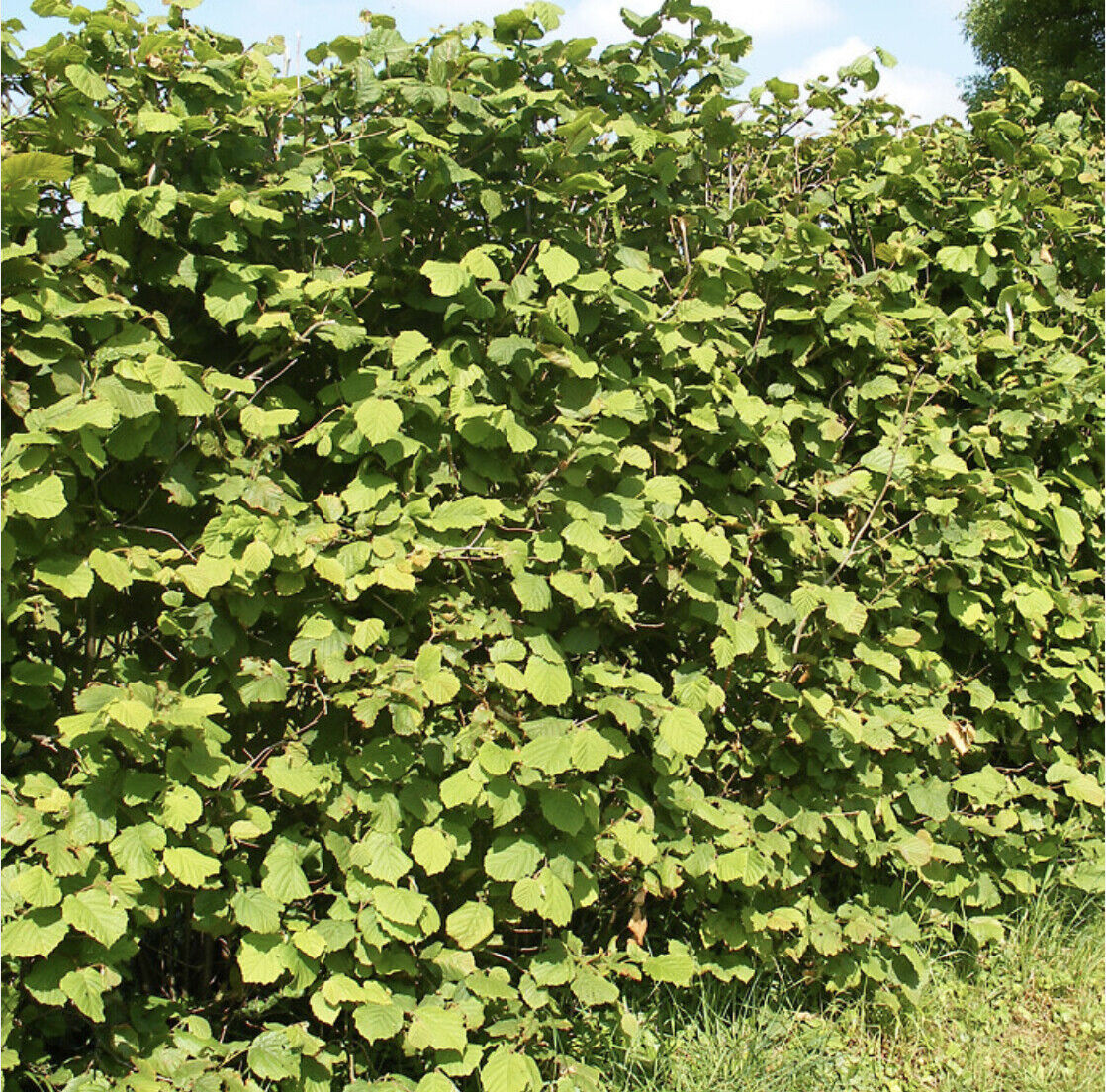
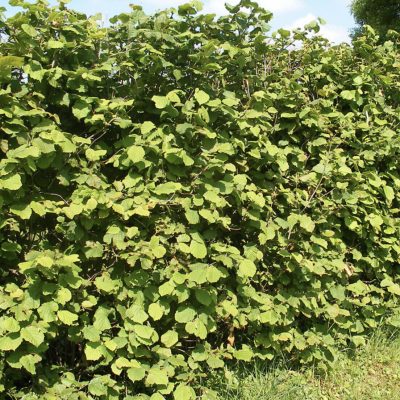
Hazel Nut (Corylus Avellana) are good for a mixed hedge and as an understorey woodland tree. Hazel Nut provides a food source for many species such as squirrels and mice and the leaves are a good food source for many moth caterpillars. Coppiced hazel provides shelter for ground-nesting birds such as the nightjar and nightingale. It is also associated with the dormouse for the provision of nuts before hibernation and for the caterpillars as a food source. Coppiced Hazelwood can be knotted and twisted and can be used for bean poles, pea sticks, hurdles and furniture. The hazel nuts are edible.
Get Notified When Back in StockEnter your email below and we'll notify you as soon as this product is back in stock at Sunnyside Nurseries.
Hazel (Corylus avellana) is a good choice for a mixed hedge and as an understorey woodland tree. It feeds wildlife: squirrels and mice eat the nuts, and the leaves are food for many moth caterpillars. Coppiced hazel gives shelter to ground-nesting birds such as the nightjar and nightingale, and hazel is linked with the dormouse, which relies on the nuts before hibernation.
The hazel nuts are edible. Coppiced hazel wood can also be used for bean poles, pea sticks, hurdles and furniture.
These plants are bare root and 2-3ft. Looking for a different size? See the 40-60cm size.
Size: 2-3ft bare root Packs: 10 to 100 plants Stock: in stock Delivery: UK and Ireland. See delivery details Planting season: September to March (while dormant)
When can I plant bare root hazel?
During the dormant season, September to March.
Are the hazel nuts edible?
Yes. The hazel nuts are edible.
Is hazel good for wildlife?
Yes. The nuts feed squirrels, mice and dormice, the leaves feed moth caterpillars, and coppiced hazel shelters ground-nesting birds.
What should I do when my bare root hazel arrives?
Plant as soon as you can. If the roots are dry, water them first and never leave them exposed to the sun. If you cannot plant straight away, cover the roots with compost in a well-drained tub or heel them into the ground, and plant within a few days.
Which size should I choose?
Larger plants give you more height from day one. Smaller plants cost less per plant and suit longer runs or tighter budgets. See the 40-60cm size.
Reviews
There are no reviews yet
Only logged in customers who have purchased this product may leave a review.


Reviews
There are no reviews yet