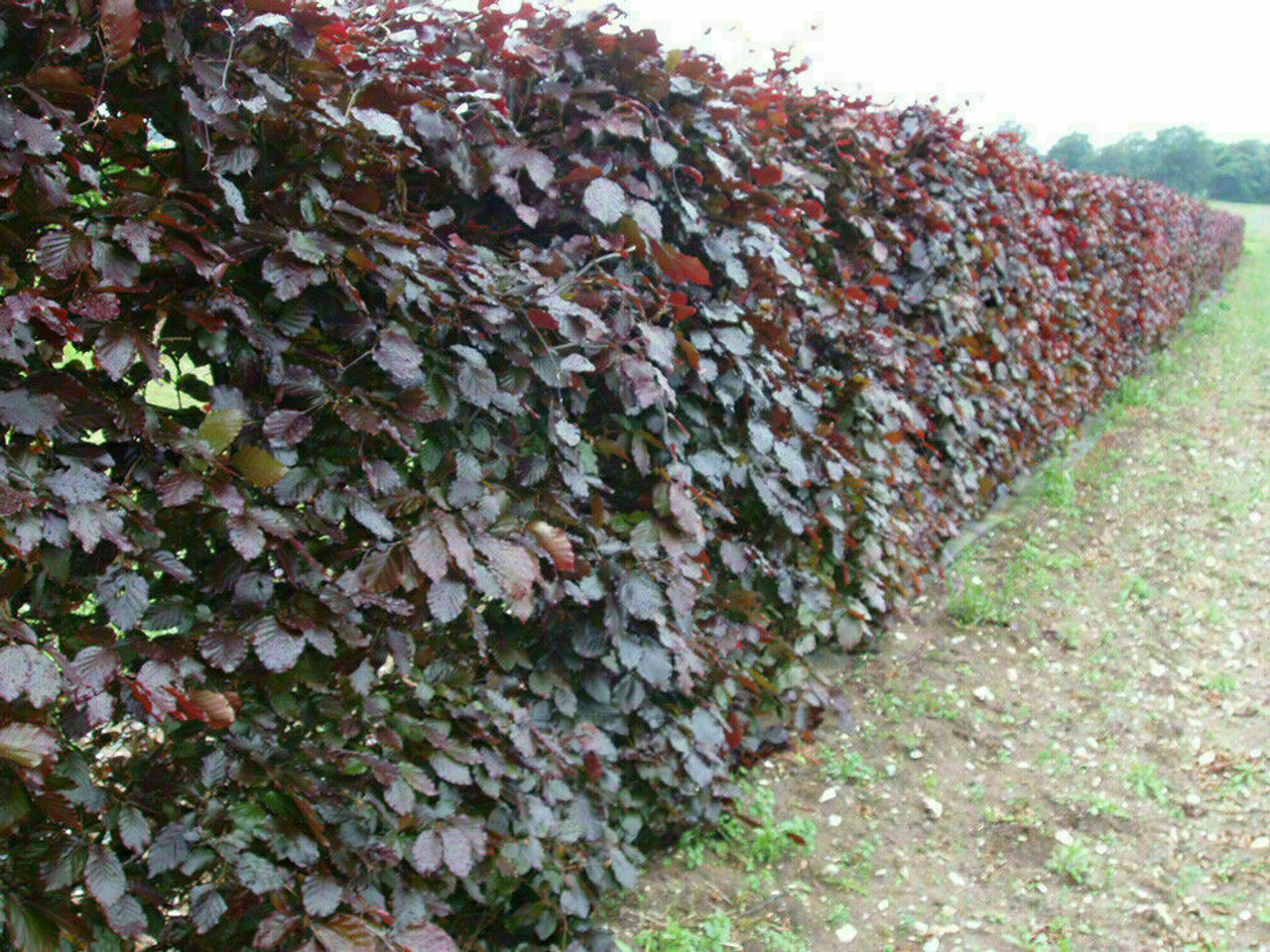
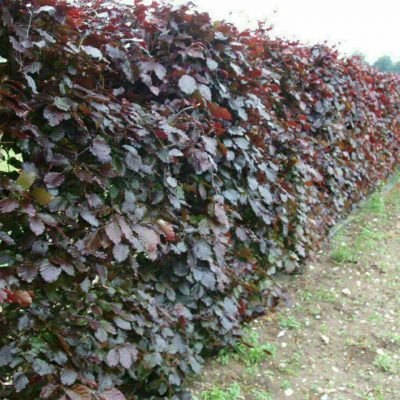
Commonly known as Purple Beech, Fagus sylvatica Atropunicea is ultimately a very large deciduous shrub with a dense broad head. Wavy-edged leaves emerge purple and silky, maturing to glossy dark purple. They become reddish in colour in autumn followed by copper over winter. Purple Beech can be grown into a tree or can be used as part of a mixed species within a native hawthorn hedge. New hedgerows should be planted in two staggered rows 30cm apart. We recommend 5 plants per metre.
Get Notified When Back in StockEnter your email below and we'll notify you as soon as this product is back in stock at Sunnyside Nurseries.
Purple beech (Fagus sylvatica ‘Atropunicea’), often sold as copper beech, is a deciduous beech with a dense, broad head. Wavy-edged leaves emerge purple and silky, mature to glossy dark purple, turn reddish in autumn and then hold a copper colour over winter.
It can be grown on as a tree or used within a mixed native hawthorn hedge. Plant new hedgerows in two staggered rows 30cm apart, at 5 plants per metre.
These plants are bare root and 2-3ft.
Looking for a different size? See purple beech 40-60cm. That size is also out of stock at the moment.
This size is out of stock at the moment. Use the back in stock notification on the product page to hear when it returns.
Size: 2-3ft bare root Packs: 10, 20, 25, 50, 100 plants Stock: out of stock Delivery: UK and Ireland. See delivery details Planting season: September to March (while dormant)
Prices: bare root purple beech 2-3ft (out of stock)
When can I plant bare root purple beech?
During the dormant season, September to March.
Is purple beech the same as copper beech?
Purple beech (Fagus sylvatica ‘Atropunicea’) is commonly sold as copper beech hedging. Its leaves turn copper over winter.
Does purple beech keep its leaves in winter?
It is deciduous, but the leaves turn copper over winter.
How many purple beech plants per metre?
We recommend 5 plants per metre, in two staggered rows 30cm apart.
Can I mix purple beech into a native hedge?
Yes. It can be used as part of a mixed native hawthorn hedge.
Which size should I choose?
Larger plants give you more height from day one. Smaller plants cost less per plant and suit longer runs or tighter budgets. See purple beech 40-60cm.
Reviews
There are no reviews yet
Only logged in customers who have purchased this product may leave a review.

Reviews
There are no reviews yet